
Application packaging selection guide
Choose a Tin Packaging Category by What Goes Inside
Application pages are useful starting points, not final specifications. Select the closest product-use group below, then use the real contents, fill method, usable internal space, contact system, closure, presentation and distribution plan to confirm the correct tin.
Dry foods and aroma-sensitive products.
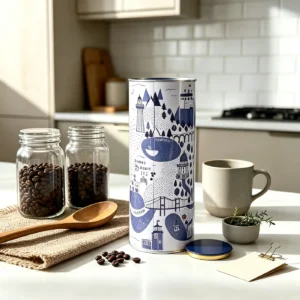
Use Tea Tin Boxes for leaf form, aroma and moisture-protection planning; Coffee Tin Boxes for bean or ground-coffee volume, inner packs and filling-line interfaces; Spice Tin Containers for particle size, dispensing and packing scope; and Food Storage Tins for tea, coffee, cookies, dry ingredients and reusable canister projects.
Weight alone does not determine size. Provide fill volume, bulk density, product samples or filled inner-pack dimensions, then define the closure and any strict sealing test separately.
Cookies, chocolate and confectionery.
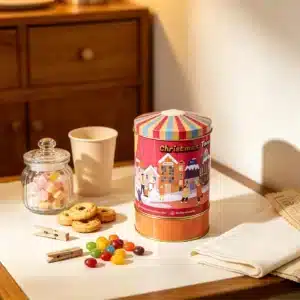
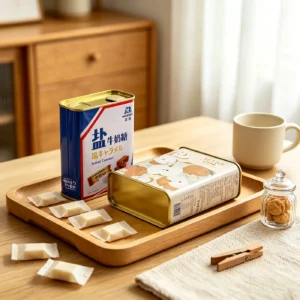
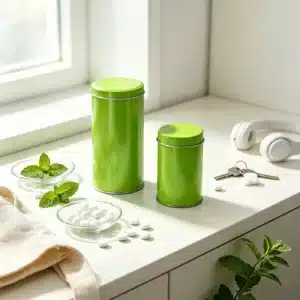
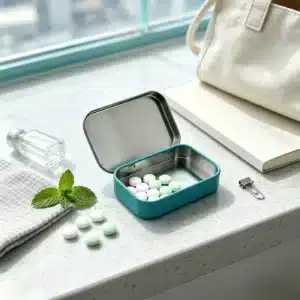
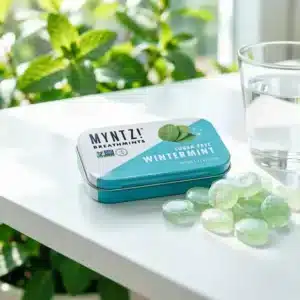
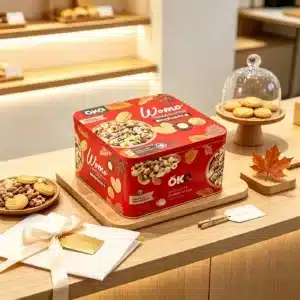
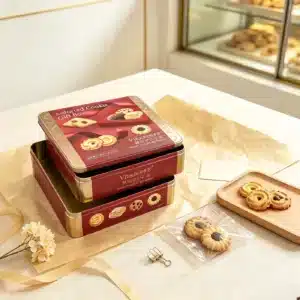
Use Cookie Tin Boxes for count, tray, headspace, windows and transport protection; Chocolate Tin Boxes for piece geometry, cavities, layers and temperature-responsibility boundaries; Candy Tin Boxes for piece count, contact method and opening; and Mint Tin Boxes for pocket use, hinged, slide or slip lids and repeated handling.
For direct contact or inner packaging, confirm the actual product, coating, liner, paper, cup, tray or insert and target-market documentation.
Solid beauty products and candle vessels.
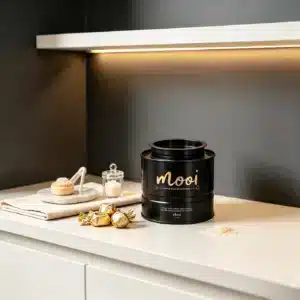
Use Cosmetic Tin Boxes for balm, solid perfume, solid cosmetics and beauty kits, including liner, pan or precision-insert planning. Formula compatibility, direct-contact suitability and stability must be validated for the real cosmetic formula.
Use Candle Tins to shortlist empty vessels for wax-fill trials. The candle maker remains responsible for wick selection, filling, burn and heat testing of the complete finished candle; Junmei can provide sample tins for that validation.
Gift sets, campaigns and branded programs.
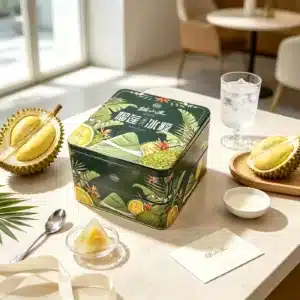
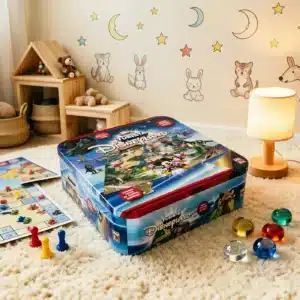
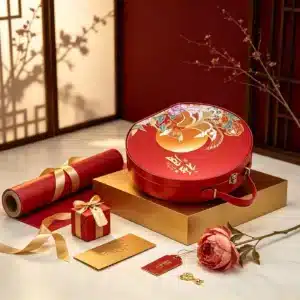
Use Gift Tin Boxes when several products, a tray, divider, custom card or opening sequence must work together. Use Promotional Tin Boxes for launches, events, loyalty programs, branded giveaways, artwork-version matrices and delivery windows.
Both groups can include special shapes, windows, handles, inserts, multi-item arrangements and repeat-order control. Schedule planning begins with artwork, tooling, samples, quantities, packing and the customer’s annual purchasing cycle—not a generic campaign deadline.
Treat category totals as discovery counts.
The same tin can appear in more than one application because a format may suit several products after project review. Category totals therefore show matching catalog references, not unique products, guaranteed capacities, application-exclusive molds or validated finished-pack performance.
Use the product grid to compare shapes and approximate outside dimensions. Final suitability is confirmed through usable-space review, samples and any required project testing.
Compare the project across six decision layers.
Define: contents and fill; usable internal space; direct-contact or inner-pack method; shape, lid and accessories; printing and artwork versions; and packing, transport and target-market requirements. These decisions connect the application page to custom development, production and quality verification.
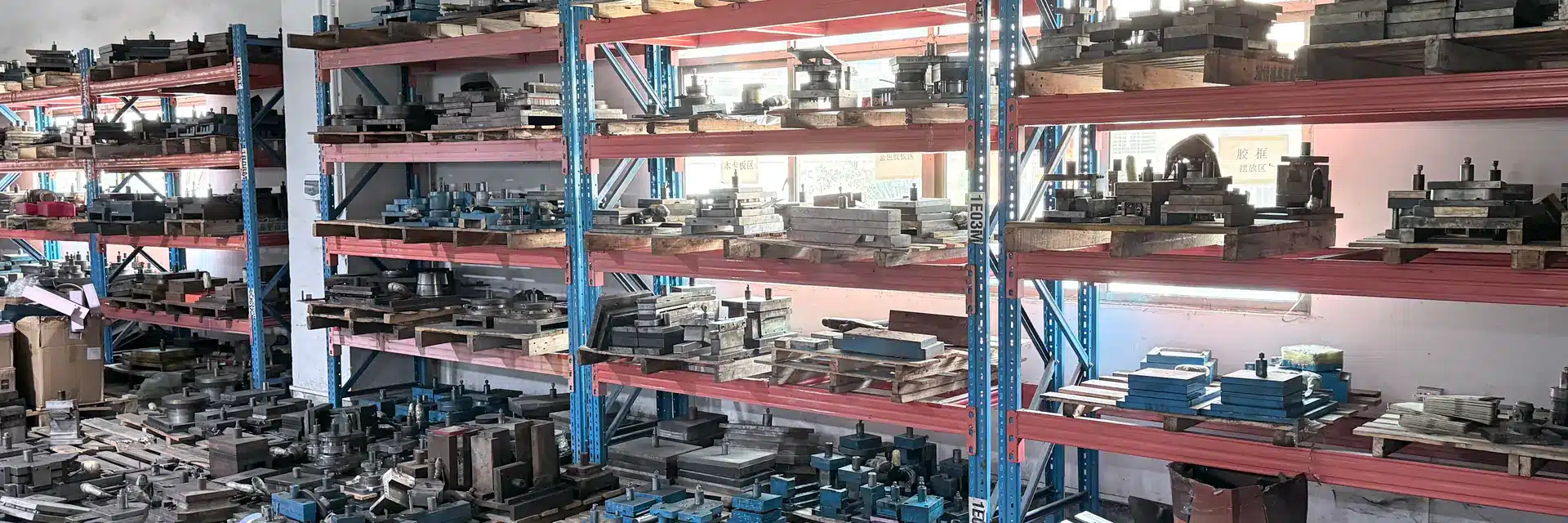
If an existing format does not fit, Junmei can evaluate size adjustment or new tooling after the product and performance requirements are clear.
Send one complete brief for a useful recommendation.
MOQ
Starts from 3,000 pieces. Final MOQ depends on size, structure, printing, artwork versions, accessories, packing and tooling.
Samples
Typically ready in 3–7 working days after specifications and artwork are confirmed. Product-fit trials, inserts, special finishes or new tooling can change the plan.
Bulk Production
Typically about 25 days after required sample or artwork approval and order confirmation. Final timing depends on quantity, versions, structure, accessories, packing and production loading.
Send the product use, samples or dimensions, fill/count, contact method, preferred shape and lid, insert or dispensing needs, artwork versions, quantity, target market, packing and delivery date. Junmei will direct the project to the most relevant application formats and identify what still requires confirmation.
Application and format review
Not Sure Which Tin Packaging Category Fits Your Product?
Send the contents, product or inner-pack dimensions, fill or count, preferred opening, contact method, insert needs, quantity and target market. Junmei will compare relevant application formats before recommending adjustment or new tooling.