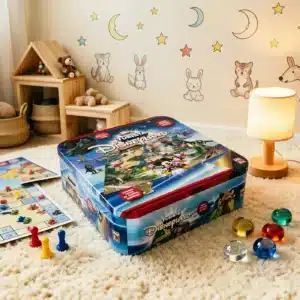
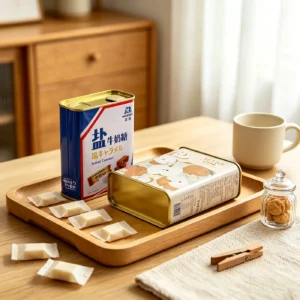
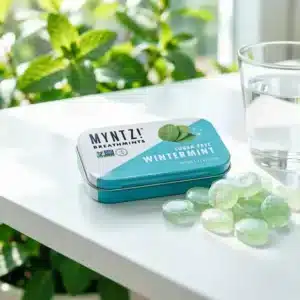
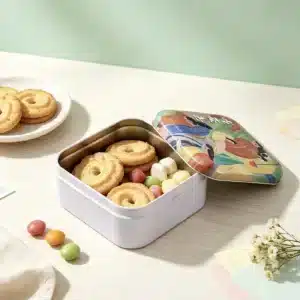
01Define length, width and height in the correct orientation.
State which panel is the front, how the lid opens and how the tin sits on shelf or enters the carton. Product cards show outside dimensions; usable internal length, width and depth require a separate review.
Provide a plan view and section view for bars, rows, cards, tools, cosmetics, cookies or mixed sets. Product samples or a filled inner pack are safer than nominal dimensions alone.
02Build the insert and headspace around the complete packout.
Junmei can evaluate trays, dividers, liners, pads, precision inserts, multi-layer layouts and custom cards. Allow for component tolerances, finger access, presentation, top clearance and movement during transport.
The insert and tin should be developed together. A catalog tin may have adequate outside dimensions but still be unsuitable if corner radius, hinge area or lid depth conflicts with the product.
03Choose slip, plug or hinged opening by use and filling access.
Slip lids support clean presentation and removable opening. Plug-style engagement can change the usable opening and sealing behavior. Hinged structures keep lid and body together and require defined hinge direction, opening angle and clearance.
Closure performance is project-specific. Junmei can check lid fit, opening and closing, and relevant sealing or functional targets without promising a universal cycle count or absolute airtight result.
04Use the flat panels without ignoring corners and formed zones.
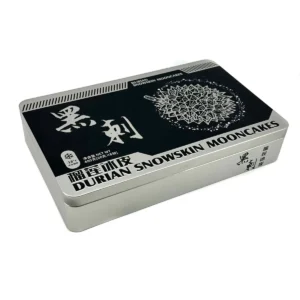
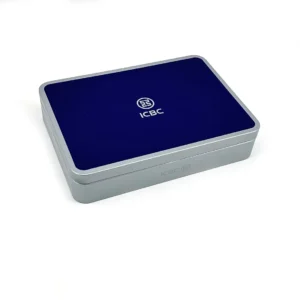
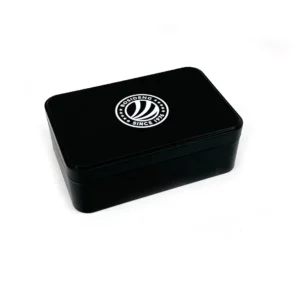
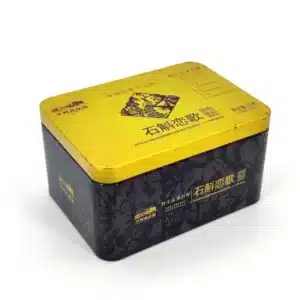
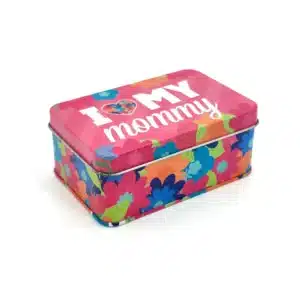
Rectangular tins provide strong front, back, side and lid panels for brand communication. CMYK or Pantone printing, varnish, metallic effects, embossing, debossing and windows can be evaluated against the selected construction.
Keep critical text, barcodes and alignment-sensitive details away from corner transitions, curls, hinges and deep formed areas. Provide panel orientation and an artwork-version matrix before approval.
05Review stacking, carton orientation and transport protection.
Rectangular formats can use cartons efficiently, but the best orientation depends on lid projection, hinges, decoration, inserts and product weight. Define whether the tins should stack, nest, display flat or ship on edge.
Junmei can evaluate outer-carton protection and perform project-specific drop or vibration work with the approved packout. Results apply to the tested configuration, not every product placed in the same tin.
06Compare current molds before committing to new tooling.
Junmei reviews existing formats against outside size, usable cavity, corner radius, lid and insert. A new tool is considered when the product arrangement, opening direction, height or branded form cannot be met safely with a current mold.
Sampling may validate fit, closure, forming, printing, insert assembly and packing. Tooling, samples and production are scheduled only after the specification and approval route are clear.
07Send a rectangular-tin brief with orientation and packout.
MOQ starts from 3,000 pieces. Samples are typically 3–7 working days after specifications and artwork are confirmed. Bulk production is typically about 25 days after required approval and order confirmation, subject to structure, versions, inserts, packing and tooling.
Send product dimensions and arrangement, required internal clearance, L×W×H or shelf constraint, corner and lid preference, hinge direction, insert, artwork panels, quantity, versions, target market, packing and delivery plan.